Germany National Football Team – Nagelsmann Squad 2026 WC
Germany’s national football team, known affectionately as Die Mannschaft, represents one of the most storied programs in international football. As the 2026 FIFA World Cup approaches, the four-time world champions find themselves in a period of transition and renewal under head coach Julian Nagelsmann. The team secured automatic qualification for the tournament in the United States, Canada, and Mexico, setting the stage for what supporters hope will be a return to prominence on the global stage.
The German Football Association (DFB) has invested significantly in rebuilding the squad following disappointing recent tournament performances. A new generation of talent, featuring players from Europe’s top clubs, has emerged alongside experienced internationals, creating a blend of youth and experience that Nagelsmann hopes will restore Germany’s winning tradition. The team has demonstrated its quality during World Cup qualification, accumulating five wins from six matches in their qualifying group.
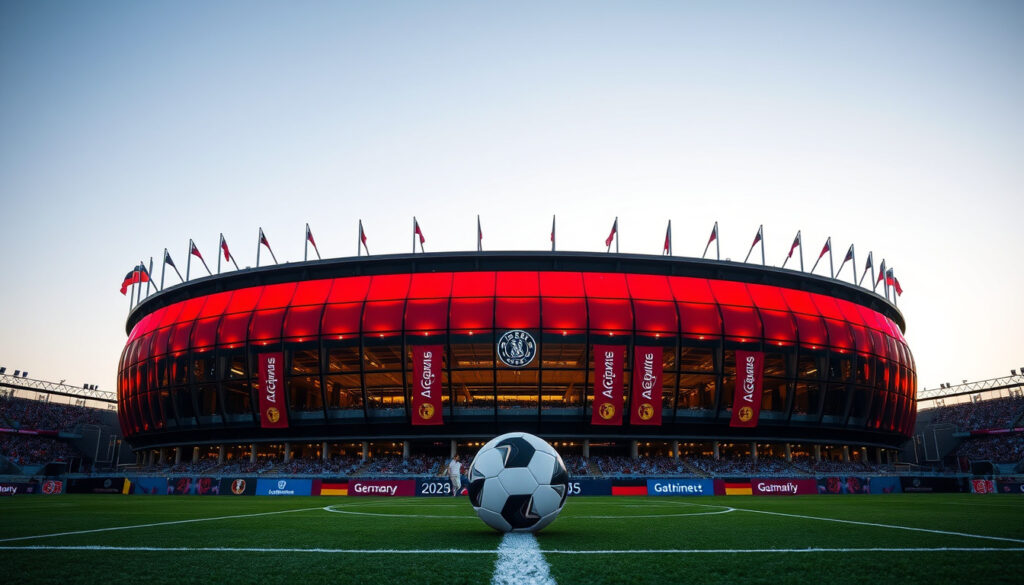
From the Allianz Arena to stadiums across Europe, millions of fans follow Germany’s matches with passionate devotion. The team’s distinctive black, red, and gold kit has become synonymous with German efficiency and tactical discipline, though under Nagelsmann’s leadership, a more dynamic and attacking philosophy has begun to take shape. Understanding the current state of Die Mannschaft requires examining its leadership, squad composition, recent results, and historical context.
Who is the current coach and key players of the Germany national football team?
Julian Nagelsmann took charge in September 2023, becoming the youngest head coach in Germany’s modern football history at age 36. His tactical flexibility and emphasis on possession-based football represent a significant departure from previous regimes.
The leadership structure centers around Julian Nagelsmann, who assumed the role of head coach in September 2023. His appointment marked a strategic shift toward rebuilding the squad after Germany suffered early elimination from major tournaments. Nagelsmann brings experience from his tenure at Bayern Munich and RB Leipzig, implementing a tactical system that emphasizes both defensive solidity and attacking creativity.
Goalkeeping Department
The goalkeeping position has undergone significant evolution as Germany prepares for the 2026 World Cup. The contingent for recent internationals included Oliver Baumann, Alexander Nübel, and Jonas Urbig. However, Urbig sustained a knee injury ahead of Germany’s 4-3 victory over Switzerland in March 2026, prompting Nagelsmann to recall Finn Dahmen. Competition for the third spot remains intense, with Noah Atubolu of Freiburg emerging as a strong candidate after demonstrating a superior shot-to-saves ratio of 64.2 percent compared to Manuel Neuer’s 60.5 percent. For more detailed analysis of goalkeeper statistics, you can explore Bundesliga’s comprehensive coverage.
Defensive Line
The backline features several players competing for starting positions. Antonio Rüdiger, who plies his trade at Real Madrid, anchors the central defense alongside Jonathan Tah of Bayern Munich. David Raum has emerged as the first-choice left-back, overtaking Maximilian Mittelstädt in the selection hierarchy, while Nathaniel Brown has also leapfrogged Mittelstädt in the pecking order. Additional defensive options include Joshua Kimmich, Waldemar Anton, Yann Aurel Bisseck, and Robin Koch. According to Get Football News Germany, these players form the core of Nagelsmann’s defensive plans.
Midfield and Attack
Germany’s midfield possesses considerable depth and quality. Felix Nmecha, Aleksandar Pavlovic, Robert Andrich, Leon Goretzka, Pascal Groß, Tom Bischof, and Angelo Stiller represent the central options, with Stiller’s continued development drawing particular attention from Nagelsmann, who has highlighted the 24-year-old’s potential future role. The attacking third features Florian Wirtz, Serge Gnabry, Kai Havertz, and Karim Adeyemi. Leroy Sané returned to the squad after earning recall through strong performances with Galatasaray in the Champions League and Süper Lig, having accumulated 70 caps for Germany throughout his career.
| Position | Key Players | Club Affiliation |
|---|---|---|
| Goalkeepers | Nübel, Baumann, Urbig, Dahmen | Stuttgart, Hoffenheim, Bayern, Mainz |
| Central Defense | Rüdiger, Tah, Anton, Koch | Real Madrid, Bayern, Dortmund, Frankfurt |
| Full-backs | Raum, Kimmich, Brown, Bisseck | RB Leipzig, Bayern, Frankfurt, Inter Milan |
| Midfield | Nmecha, Pavlovic, Goretzka, Andrich | Wolfsburg, Bayern, Bayern, Leverkusen |
| Attack | Wirtz, Havertz, Sané, Gnabry | Leverkusen, Arsenal, Galatasaray, Bayern |
| Forwards | Füllkrug, Adeyemi, Gosens | Dortmund, Dortmund, Fiorentina |
Nagelsmann has shown willingness to blood young talent, with Bayern Munich prospects Jonas Urbig and Lennart Karl receiving their first senior call-ups. The emergence of 19-year-old Said El Mala from 1. FC Köln’s youth system demonstrates Germany’s rich pipeline of developing talent.
What was Germany’s performance at Euro 2024?
Euro 2024 represented a significant opportunity for Germany to reassert themselves among Europe’s elite nations. As hosts, the team entered the tournament with heightened expectations and began their campaign with renewed vigor under Nagelsmann’s guidance. The tournament provided valuable experience for younger players while testing the tactical systems implemented during the preceding months of preparation. Germany advanced from their group stage but ultimately fell short in the knockout rounds, ending their bid for a fourth European Championship title.
Group Stage Results
The group stage saw Germany face several competitive opponents in what proved to be a challenging initial phase. Home advantage provided a significant boost, with passionate crowds filling stadiums across the host nation. The team’s performance demonstrated both promising attacking play and defensive vulnerabilities that would become evident as the tournament progressed. Points accumulated during this phase proved essential for progression to the knockout stages.
Tournament Implications
The tournament outcome prompted reflection within the German football establishment regarding the rebuilding process. While the team showed improvement compared to previous major tournaments, the gap between current performance and the high standards associated with Die Mannschaft remained apparent. Nagelsmann’s tactical approaches received both praise for their innovation and criticism for inconsistencies in execution against top-tier opponents. You can find comprehensive analysis of Germany’s tournament performance through FourFourTwo’s detailed coverage.
What is the history and achievements of the Germany national football team?
Germany’s national football team history spans over a century of remarkable achievements and dramatic storylines. The program has produced some of the sport’s greatest players and managers, establishing traditions of excellence that continue to influence modern football. From humble beginnings in 1908 to becoming one of only eight nations to have won the World Cup more than twice, Germany’s journey reflects the nation’s broader sporting culture and commitment to technical development.
World Cup Success
Germany’s four World Cup victories rank among the most prestigious accomplishments in international football history. The team won the tournament in 1954, 1974, 1990, and 2014, demonstrating sustained excellence across different eras of the sport. The 1954 triumph, known as the “Miracle of Bern,” holds particular significance in German cultural history, representing post-war national redemption through sporting success. The 2014 victory in Brazil, where Mario Götze’s extra-time goal defeated Argentina in the final, marked Germany’s most recent world championship.
Despite their historic success, Germany has struggled in recent major tournaments. The team failed to advance past the group stage at both the 2018 and 2022 World Cups, and their Euro 2024 campaign ended earlier than many anticipated. This period represents one of the most challenging stretches in the program’s modern history.
European Championship Record
Germany has claimed three European Championship titles, tying them among the most successful nations in the competition’s history. Their victories came in 1972, 1980, and 1996, with the latter triumph under coach Berti Vogts representing a particularly emotional achievement following reunification. The team has reached the final on multiple other occasions, establishing Germany as a consistent force in European football’s premier international competition.
What is the current FIFA ranking and upcoming fixtures?
Germany’s FIFA ranking reflects the team’s transitional phase, positioning them among the second tier of contenders rather than the traditional top spots they once occupied. While the exact current ranking fluctuates based on recent results and competitor performance, Germany remains a respected force in international football, capable of competing with any nation on their day. The ranking has improved following strong performances during World Cup qualification.
World Cup 2026 Qualification
Germany secured World Cup qualification with five wins from six matches in their qualifying group, demonstrating dominance over their regional opponents. The team completed their final qualifiers against Luxembourg and Slovakia in November 2025, with Nagelsmann emphasizing the importance of victories to secure automatic qualification and favorable seeding for the World Cup draw. Securing top spot in their qualifying group assured Germany’s placement in the first pot for the draw, providing advantageous positioning for the tournament proper.
Preparation Matches
Ahead of the 2026 World Cup, Germany scheduled high-profile friendly matches to test their squad against quality opposition. The March 2026 friendlies against Switzerland and Ghana featured a 25-player squad including two debutants—Bayern Munich prospects Jonas Urbig and Lennart Karl—alongside six returning internationals. These matches served as final evaluation opportunities before the World Cup squad announcement. For comprehensive coverage of Germany’s upcoming matches, Goal.com provides detailed squad analysis.
Where to Watch Germany Matches
Fans can follow Germany’s matches through multiple broadcast partners and streaming platforms. Official coverage is available through the DFB’s media channels, while major sports networks provide extensive German football content. The team’s official website offers match schedules, ticketing information, and behind-the-scenes content for supporters seeking comprehensive coverage of Die Mannschaft’s activities.
Key moments in Germany national football team history
- 1908: Germany plays its first official international match against Switzerland, marking the beginning of the national team’s history.
- 1954: Germany wins their first World Cup in the “Miracle of Bern,” defeating Hungary 3-2 in a dramatic final.
- 1974: Hosting the World Cup on home soil, Germany wins their second title with a victory over the Netherlands in the final.
- 1990: Following reunification, Germany captures their third World Cup in Italy, defeating Argentina in the final.
- 1996: Germany wins their third European Championship in England, with Oliver Bierhoff’s golden goal securing victory against the Czech Republic.
- 2014: Mario Götze’s extra-time goal gives Germany their fourth World Cup with a 1-0 victory over Argentina in Brazil.
- 2018: Germany suffers early elimination from the World Cup in Russia, failing to progress beyond the group stage for the first time since 1938.
- 2023: Julian Nagelsmann appointed as head coach, beginning a new era of reconstruction for the national team.
- 2025: Germany secures automatic qualification for the 2026 World Cup with five wins from six matches.
The 2026 World Cup in North America represents a pivotal moment for Germany’s rebuilding project. With qualification secured, Nagelsmann has time to refine his squad and tactical approach before the tournament begins in June 2026.
What is confirmed and what remains unclear about Germany’s squad?
| Established information | Unresolved questions |
|---|---|
| Julian Nagelsmann will lead the team at the 2026 World Cup | Final goalkeeper selection remains competitive |
| Germany has secured automatic World Cup qualification | Fitness status of key players entering the tournament |
| David Raum has established himself as first-choice left-back | Final squad size and tactical approach |
| Florian Wirtz and Kai Havertz will feature prominently | Potential impact of injuries during preparation period |
| Leroy Sané has returned to the squad following his recall | Which emerging players will secure final squad places |
| Young talents like Wirtz represent the future core | Long-term captaincy situation beyond 2026 |
The significance of Germany’s current rebuild under Nagelsmann
The appointment of Julian Nagelsmann marked a calculated gamble by the DFB, choosing youth and tactical innovation over experienced international managers. At 36 years old, Nagelsmann brought fresh perspectives shaped by his success in the Bundesliga with Hoffenheim, Leipzig, and Bayern Munich. His arrival signaled the beginning of a deliberate process to integrate younger players while maintaining competitive standards during the transition period. You can see the Nagelsmann’s 2026 World Cup squad here.
Nagelsmann’s tactical philosophy emphasizes possession-based football with dynamic positioning and quick transitions. This approach differs notably from the more pragmatic styles employed by his predecessors, reflecting his belief that Germany must evolve to compete with the world’s elite teams. The implementation requires time and consistent selection, factors that have influenced his squad selection during friendlies and qualifiers.
The rivalry with other European powers adds context to Germany’s rebuilding efforts. Nations like France, England, and Spain have maintained strong performances in recent tournaments, raising the benchmark for success. Nagelsmann has acknowledged the challenge of closing this gap while expressing confidence in Germany’s talent pipeline and footballing infrastructure. According to comprehensive historical records, this transitional period represents one of several rebuilding phases the program has navigated throughout its history.
What are the key sources and statements about the team?
“We need victories to secure automatic qualification and a favorable position in the World Cup draw.”
— Julian Nagelsmann, DFB press conference regarding final World Cup qualifiers
Nagelsmann has consistently emphasized the importance of building momentum through qualification matches and preparation friendlies. His public statements highlight both realistic assessment of the team’s current position and optimism about future prospects. The head coach has praised individual performances while maintaining focus on collective improvement.
“Stiller is a player with great potential. His continued development will determine his future role in the squad.”
— Nagelsmann on Angelo Stiller’s international prospects
Regarding player development, Nagelsmann has offered measured assessments of emerging talents. His comments about Angelo Stiller exemplify the balancing act between recognizing potential and maintaining high standards for international selection. Official communications from the DFB provide the most authoritative information on squad selections and strategic objectives.
Where does Germany stand heading toward the 2026 World Cup?
Germany enters the 2026 World Cup cycle with realistic expectations tempered by recent disappointments but buoyed by genuine signs of progress. The combination of experienced internationals, emerging talents, and tactical innovation under Nagelsmann creates cautious optimism among supporters. Qualification was secured comfortably, and the team has demonstrated the ability to compete against quality opposition during preparation matches.
The road to North America represents an opportunity for redemption and renewal. While historical expectations demand excellence, the current squad appears focused on incremental improvement rather than grandiose promises. Key players like Florian Wirtz, Kai Havertz, and Antonio Rüdiger provide the quality foundation, while fresh faces bring energy and hunger to the collective effort. Sports enthusiasts interested in broader football analysis might find value in exploring our coverage of NFL Fantasy Mock Draft strategies for comparative insights into team building approaches.
Success at the 2026 World Cup would mark a significant milestone in German football’s ongoing evolution. The tournament’s expanded format and North American setting add unique dimensions to the challenge, but Germany’s tradition of performing under pressure suggests they remain capable of competing at the highest level. How fans and analysts assess the team’s progress will depend largely on how they navigate the knockout stages against elite competition.
Frequently asked questions
How many World Cups has Germany won?
Germany has won four FIFA World Cup titles, earned in 1954, 1974, 1990, and 2014. These victories place Germany among the most successful nations in World Cup history.
What is the current FIFA ranking of the Germany national football team?
Germany’s FIFA ranking has improved following strong World Cup qualification results. While exact positioning fluctuates with recent outcomes, the team remains among the top 15 nations in the world rankings.
Who is the head coach of Germany?
Julian Nagelsmann has served as Germany’s head coach since September 2023. He was appointed following a distinguished club coaching career with Bayern Munich and RB Leipzig.
Who is the captain of the Germany national football team?
Leadership responsibilities have been shared among experienced players. Joshua Kimmich has taken on significant captaincy duties in recent matches, though the official captaincy situation may evolve before the 2026 World Cup.
Where can I watch Germany national football team matches?
Germany’s matches are broadcast through major sports networks and streaming platforms in respective countries. The DFB’s official channels provide match schedules and additional content for supporters.
How did Germany perform at Euro 2024?
Germany advanced from their group stage at Euro 2024 but were eliminated earlier than expected in the knockout rounds. The tournament provided valuable experience for the rebuilding squad.
When was the Germany national football team founded?
The Germany national football team was founded in 1908, with their first official international match played against Switzerland in the same year.
What are Germany’s upcoming matches?
Germany continues to schedule international friendlies and competitive matches as part of their World Cup preparation. The March 2026 friendlies against Switzerland and Ghana represented key preparation opportunities before the tournament proper.
More related posts
 Taylor Swift: Facts, Rumors, and Unanswered Questions
 Joseph Stalin: Life, Death, and Legacy of the Soviet Leader
 Bill Hader: Condition, Vision Loss, Relationships, and Career
 Maude Apatow: Biography, Family, Relationships, and Career
 O car de la Renta: Luxury Brand Hi tory, Owner hip & Pricing
 Sean Avery: NHL Enforcer Turned Actor and Media Personality
 Best Laptop for Students 2026: Tested & Compared for College
 Carlie Irsay-Gordon: Biography, Husband, Net Worth & Colts CEO